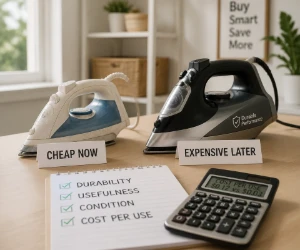
When the Cheapest Choice Can Cost More
- Everyday shoes: an uncomfortable pair that stays in the closet is not cheaper than a slightly better pair worn regularly.
- Phones and laptops: an underpowered device can become expensive when it cannot run required apps or must be replaced soon.
- Chargers and accessories: missing compatibility, low capacity or poor construction can turn a small saving into another purchase.
- Furniture: shipping and difficult return terms matter when an inexpensive item arrives damaged or does not fit.
- Bulk groceries: the unit price means little if part of the package spoils before your household uses it.
Spend More Only for Something Useful
Paying more is not automatically smarter either. Premium branding, decorative features and specifications you will never use can increase the price without improving your experience.
The worthwhile upgrade is the one that solves a real problem: better fit, enough storage, compatible software, a useful warranty or a size your household can finish.
Compare the Lower-Priced Options First
Search OFree for Refurbished Electronics, Open-Box Deals, Clearance Deals, or Budget Laptops.
Refurbished, restored and open-box products can provide better hardware for less, but check the listed condition, included accessories, return policy and warranty before ordering.
Use the Cost-Per-Use Test
Divide the price by how often you realistically expect to use the product. A $60 pair of shoes worn 100 times costs less per use than a $25 pair worn twice because it hurts.
The same test works for appliances, clothing, tools and electronics. It does not predict durability perfectly, but it moves attention away from the checkout price and toward actual value.
Buy the Least Expensive Option That Works
Decide what the product must do, remove features that do not matter and compare the remaining choices. Spend more only when the difference improves compatibility, comfort, durability or another requirement you will genuinely notice.
That is the useful middle ground between buying the cheapest item available and paying for a premium version you do not need.
Find More Frugal Living & Finance Tips