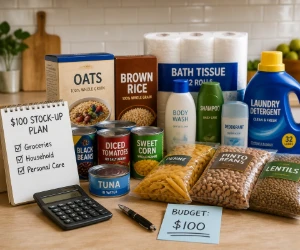
Choose What Is Worth Stocking Up On
The best candidates are products your household uses consistently and can store comfortably. Think paper products, cleaning supplies, toiletries, shelf-stable food and freezer items you regularly replace.
Skip unfamiliar products, short-dated food and bulk packages that will become clutter. A low unit price is not useful when part of the purchase gets thrown away.
Give Every Dollar a Job
A simple $100 plan could look like this:
- $35 for groceries: frequently used pantry or freezer items with a meaningful sale price.
- $25 for household supplies: detergent, paper products or cleaning items running low at home.
- $20 for personal care: toothpaste, shampoo or other predictable replacements.
- $10 for one unusually strong deal: a useful item at a price worth buying ahead.
- $10 left unspent: protection against buying filler just because money remains in the budget.
Adjust the categories to your household. The useful part is setting limits before seeing the promotions.
Find Offers That Match the Plan
Ready to compare current prices? Try a broader OFree search for Grocery Deals, Household Coupons, Personal Care Deals, or BOGO Deals.
Use coupons, BOGO promotions and store rewards only when they match something already on the list. Buying an unnecessary product to earn a reward takes money away from the products the trip was supposed to cover.
Check Three Things in the Store
- Unit price: compare the cost per ounce, count or load rather than the size of the discount label.
- Realistic quantity: buy only what you can use before it expires or loses quality.
- Final total: confirm that coupons and rewards applied before leaving checkout.
If the cart goes over $100, remove the weakest deal rather than increasing the budget. A stock-up plan works because it gives the sale boundaries.
A Smaller Useful Stockpile Is Better
You do not need a garage full of supplies to save money. A few weeks of products bought at good prices can reduce emergency store trips and give you time to wait for the next promotion.
The best stock-up cart contains products you recognize, use and would eventually buy anyway.
Find More Frugal Living & Finance Tips