 Only Free Stuff, Electronics & Deals


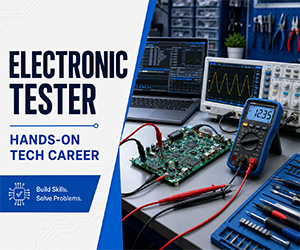


An electronic tester helps make sure devices, circuit boards, components, and electronic systems work the way they should before they reach customers. It is a practical tech role for people who like testing, measuring, checking details, using tools, and figuring out why something is not working.
This can be a good path if you want to work around technology but do not want your entire day to be coding. Electronic testers may work in manufacturing, engineering labs, repair shops, medical devices, automotive electronics, telecommunications, aerospace, consumer electronics, and other technical fields where “it probably works” is not good enough.
What Does an Electronic Tester Actually Do?
An electronic tester checks electronic parts, assemblies, or finished devices to make sure they meet quality, performance, and safety requirements. The exact work depends on the employer, but the goal is usually the same: find problems before the product reaches the real world and embarrasses everyone involved.
Typical work may include:
- Testing circuit boards and components to confirm they work correctly.
- Using tools like multimeters and oscilloscopes to measure voltage, current, resistance, signals, and performance.
- Following test procedures so every product is checked the same way.
- Finding defects such as bad solder joints, damaged parts, weak connections, failed components, or incorrect readings.
- Documenting results so engineers, technicians, quality teams, or production teams know what happened.
- Troubleshooting problems and helping decide whether a product can be repaired, adjusted, retested, or rejected.
Where Electronic Testers Work
Electronic testing shows up in more places than many people expect. Any industry that builds, repairs, inspects, or relies on electronics needs people who can check whether those systems work correctly.
Consumer Electronics
Phones, tablets, laptops, headphones, speakers, smart home devices, chargers, and accessories all need quality checks before or after production.
Automotive and Electric Vehicles
Modern vehicles rely on sensors, modules, battery systems, displays, wiring, and control units. Testing matters because one small electronic problem can affect safety, comfort, diagnostics, or performance.
Medical, Aerospace, and Industrial Equipment
These areas often require careful testing because reliability is critical. The work may be more technical, but it can also become more stable and better paid as your skills grow.
Is This the Same as Product Testing?
Not exactly, and this distinction matters.
An electronic tester is usually a technical job. You may use test equipment, follow procedures, inspect hardware, troubleshoot failures, record measurements, and document detailed results.
Consumer product testing is different. That usually means trying products at home and giving feedback as a user. It can be fun and useful, but it is not the same as working as an electronics tester, technician, or quality-control specialist.
If you want to explore consumer testing for gadgets and products, start here:
Find Product Testing Opportunities
🔍 Pro-Tip: If you are interested in tech testing but not sure which path fits, search by the kind of testing you actually want: Product Testing, Electronics Testing, Free Gadgets, or Tech Rewards.
Skills That Help You Get Started
You do not need to be a genius engineer to understand this career, but you do need patience, accuracy, and a willingness to learn technical tools. This is a job where small details matter, and “close enough” can become a very expensive sentence.
- Basic electronics knowledge: Understand circuits, components, voltage, current, resistance, continuity, and signals.
- Tool comfort: Learn how to use a multimeter, test fixtures, soldering tools, and eventually an oscilloscope.
- Attention to detail: A missed defect can become a bigger problem later.
- Reading instructions: Testers often follow procedures, diagrams, work orders, schematics, or engineering notes.
- Clear documentation: You need to record what you tested, what failed, what passed, and what you found.
- Problem-solving: Good testers do not just say “it failed.” They help narrow down why it failed.
How to Become an Electronic Tester
There is more than one path into this field. Some people start through technical school or community college. Others begin in assembly, repair, quality control, production, or technician assistant roles and build skills on the job.
- Learn basic electronics. Start with circuits, components, soldering, measurements, and simple diagnostic tools.
- Consider technical training. Electronics technology, electrical engineering technology, mechatronics, robotics, or manufacturing technology can all be useful paths.
- Build hands-on practice. DIY electronics kits, soldering practice, repair projects, Arduino-style projects, and basic troubleshooting can help you learn how electronics behave in real life.
- Look for entry-level roles. Search for electronic tester, test technician, electronics technician, quality technician, repair technician, assembly technician, or technician aide.
- Keep improving tool skills. The more comfortable you become with meters, schematics, test equipment, and documentation, the more useful you become.
Do You Need a Degree?
Not always. Some jobs prefer a certificate, associate degree, military electronics experience, or technical training. Others may hire entry-level workers and train them if they already show strong attention to detail, basic tool knowledge, and real interest in electronics or mechanical work.
A bachelor’s degree may help for engineering roles, but many electronic tester and technician roles are more skills-focused. The best path depends on the industry, the equipment, and how technical the job is.
What About Pay?
Pay can vary a lot by location, industry, shift, experience, and how technical the role is. A basic production testing job may pay less than a specialized test technician role in aerospace, utilities, medical devices, semiconductors, telecommunications, or engineering services.
The simple rule is this: the more you can troubleshoot, read schematics, use test equipment, document results, and understand the system, the more valuable you become. Button-pushing is entry-level. Understanding what the failed test means is where the career starts getting more interesting.
Who This Career May Fit
An electronic tester role may be a good fit if you:
- Like hands-on work more than sitting in meetings all day.
- Enjoy fixing, testing, building, measuring, or taking things apart.
- Can follow careful instructions without rushing.
- Notice small details that other people miss.
- Want a practical path into tech, electronics, manufacturing, or engineering support.
- Prefer a career where skills can grow through real experience.
When This Career May Not Be the Best Fit
This job is not for everyone. Some roles can be repetitive, especially in production environments. You may need to stand for long periods, follow strict procedures, work with small parts, document failures carefully, or meet quality targets.
If you want a fully creative role with no routine, this may feel too structured. If you like precision, tools, troubleshooting, and practical problem solving, it may be a strong fit.
A Simple First Step
If you are curious, do not start by buying expensive equipment. Start small. The goal is to see whether you actually enjoy electronics work before your desk turns into a miniature repair shop.
- Learn how basic circuits work.
- Practice with a low-cost multimeter.
- Try a beginner electronics kit.
- Watch beginner soldering and troubleshooting tutorials.
- Search local job listings for electronic tester and test technician roles to see what employers near you ask for.
More Tech and Product Testing Opportunities
If you are interested in tech, gadgets, and testing products from the consumer side too, these pages can help:
The Simple Idea
An electronic tester helps make sure electronic products and systems work correctly before they are used by customers, patients, drivers, workers, or everyday consumers.
It can be a practical tech career for people who like hands-on work, careful testing, tools, troubleshooting, and real-world problem solving. Start with basic electronics knowledge, build tool skills, and look for entry-level tester or technician roles that can help you grow.